


Supporting Stroke Prevention
with OMRON AFib Blood Pressure Monitors
Atrial Fibrillation (AFib) is the most common sustained heart arrhythmia in the UK and Ireland and a leading cause of preventable stroke, avoidable hospital admissions, and long term disability12.
More than 1.5 million people in the UK are diagnosed with AFib, with an estimated 500,000 additional cases undiagnosed2.
For primary care teams, improving AFib detection represents a key opportunity to reduce stroke risk and improve patient outcomes.
AFib and Hypertension: A High Risk Patient Group
Hypertension and AFib often occur together, sharply raising cardiovascular and stroke risk. AFib alone increases stroke risk by five times5; combined with hypertension, the danger is even greater.
Regular monitoring and management of both conditions are crucial for cardiovascular care6.


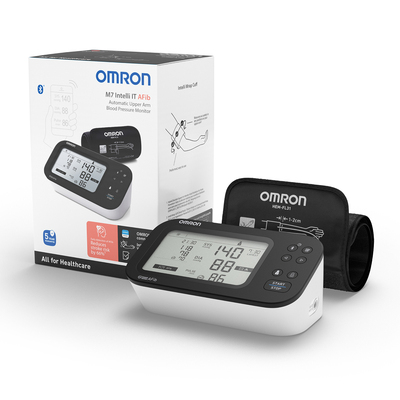
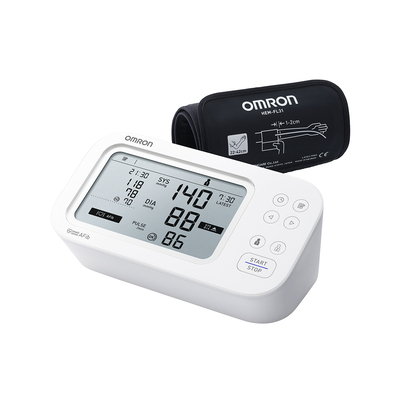
Explore OMRON’s IntelliSense AFib BPM Range
Detect Atrial Fibrillation while there is still time to act.
References
1. Van Gelder IC, et al. 2024 ESC Guidelines for the management of atrial fibrillation. European Heart Journal. 2024;45(36).
2. Stroke Association. Atrial Fibrillation: Information and Resources (UK).
3. Staerk L, et al. Atrial fibrillation: epidemiology, pathophysiology, and clinical outcomes. Circulation Research. 2017;120(9):1501–1517.
4. Gibbs H, et al. Clinical outcomes in asymptomatic and symptomatic atrial fibrillation. American Journal of Medicine. 2021;134(7):893–901.
5. Dzeshka MS, et al. Atrial fibrillation and hypertension. Hypertension. 2017;70(5):854–861.
6. Kim D, et al. Ideal blood pressure in patients with atrial fibrillation. Journal of the American College of Cardiology. 2018;72(11):1233–1245.
7. Janik M, Raad G, Nijmeh G, O'Steen M, Rasmussen J. Diagnostic accuracy for detecting atrial fibrillation using a novel machine learning algorithm in a blood pressure monitor. Heart Rhythm. 2024 Apr 30:S1547-5271(24)02520-7.
8. Lei N, et al. Hybrid Decision Support to Monitor Atrial Fibrillation for Stroke Prevention. International Journal of Environmental Research and Public Health. 2021;18(2):813.