Travel Vaccinations: Are You Ready for Peak Travel Season?
Published: 1 July 2026
Summary
Some travel vaccines are free on the NHS, others you pay for privately, and your destination decides the vaccine you need before you fly.
Travel vaccination demand peaks every summer, and patients often arrive at the practice counter days before departure expecting same week protection.
The reality is more structured.
The vaccines a traveller needs depend on the destination and the individual risk profile, and the NHS funds only four travel vaccines because they protect wider public health.
Everything else, including yellow fever, rabies and antimalarial medication, is arranged privately.
This guide explains the NHS versus private split in full, sets out the doses, timelines and certificates that matter, and covers the destination and patient factors that change a recommendation.
It is written to help primary care teams give clear and consistent answers during the busiest travel period of the year.
NHS vs Private Travel Vaccines
The single most common misunderstanding in travel health is that NHS funding follows clinical need. It does not.
The NHS funds travel vaccines based on public health risk to the UK, not on how important a vaccine is to the individual traveller.
Four travel vaccines are available free from a GP surgery: polio (given as the combined diphtheria, tetanus and polio booster), typhoid, hepatitis A and cholera.
These are funded because the diseases pose the greatest risk to public health if reintroduced into the country.
Every other travel vaccine sits outside NHS funding and must be paid for privately, even when it is clinically recommended for the destination.
The vaccines patients pay for privately include hepatitis B, Japanese encephalitis, meningitis for travel purposes, rabies, tick-borne encephalitis, tuberculosis and yellow fever.
Antimalarial medication is also a private cost, which catches many travellers off guard.
The table below sets out the funding split clearly.
| Protection | NHS or private | Typical reason it is needed |
|---|---|---|
| Hepatitis A | Free on NHS | Contaminated food and water in many regions |
| Typhoid | Free on NHS | Poor sanitation in South Asia, Africa, South America |
| Polio (combined booster) | Free on NHS | Routine cover plus travel to at-risk areas |
| Cholera | Free on NHS | Higher risk trips such as aid or relief work |
| Yellow fever | Private (certified centres only) | Parts of Africa and South America, often a legal entry requirement |
| Hepatitis B | Private | Blood and body fluid exposure, longer stays |
| Rabies | Private | Remote travel, animal contact, limited medical access |
| Japanese encephalitis | Private | Extended rural stays in parts of Asia |
| Malaria (tablets, not a vaccine) | Private prescription | Mosquito-borne risk across the tropics |
Knowing this split early lets you set patient expectations on cost and avoid the awkward conversation at the point of departure. It also explains why a single trip often needs both routes, with free NHS vaccines taken at the surgery and the rest arranged privately.
Why the Funding Split Exists
The logic behind the NHS list is public health, not personal protection.
The four funded vaccines guard against diseases that would pose a wider threat if a returning traveller reintroduced them into the UK population, which is why hepatitis A, typhoid, polio and cholera make the list while yellow fever and rabies, despite being more serious for the individual, do not.
This distinction is set out plainly in NICE Clinical Knowledge Summaries and reflected in the NHS guidance practices work to every day.
For primary care, the funding split creates a practical workflow question.
A practice signed up to provide NHS travel vaccination services administers the four free vaccines after a risk assessment, but private vaccines such as yellow fever, hepatitis B and rabies require either a private travel service or referral to a pharmacy or specialist clinic.
Many practices end up doing both, which means holding stock for the NHS vaccines and deciding whether to extend into private provision.
Either way, the consultation starts the same way: a risk assessment against the destination, then a clear conversation about what is free and what carries a cost.
Why Vaccines Depend on Destination and Individual Risk
There is no universal travel vaccine list, because the right recommendation depends on where someone is going, what they will do there, and who they are.
A two week package holiday to a coastal resort carries a different risk profile to a month of rural backpacking in the same country.
The authoritative starting point for any consultation is the TravelHealthPro country guidance from the National Travel Health Network and Centre, which sets out recommendations destination by destination.
Risk rises with rural travel, backpacking, hostel or camping stays, long trips, and any pre-existing condition that weakens the immune response.
Factors that change a recommendation
A short risk assessment usually surfaces the details that move a recommendation one way or the other.
The main factors to check are:
• Destination and the specific regions within it, since risk varies inside a single country
• Trip length, because longer stays raise cumulative exposure
• Activities such as rural travel, animal contact or healthcare work
• Accommodation type, with camping and hostels carrying more risk than resorts
• Age, pregnancy and any condition affecting the immune system
Working through these points turns a vague request for travel jabs into a focused plan, which is exactly what saves time when the waiting room is full during peak season.
How recommendations vary by destination
Popular destinations illustrate how quickly the picture changes.
For India, Thailand and much of South and Southeast Asia, hepatitis A and typhoid are recommended for most travellers, with hepatitis B, Japanese encephalitis and rabies added for longer or rural trips.
For parts of sub-Saharan Africa and South America, yellow fever may be both recommended and a legal entry requirement, and antimalarial tablets are often advised.
For northern and central Europe, North America and Australia, most travellers need no travel specific vaccines at all, though routine cover should still be confirmed.
Always check the live country page on TravelHealthPro, since outbreaks and requirements shift through the year.
When to Vaccinate
Timing is the part patients most often get wrong.
The NHS advises seeing a GP or travel clinic at least four to six weeks before travel, and ideally six to eight weeks, because some vaccines need time to build immunity and others require multiple doses spread over weeks.
A patient who walks in seven days before a flight cannot complete a rabies course, which needs several doses, and may not reach full protection from a single dose vaccine either.
Booking early is the difference between protected and unprotected travel.
A second timing issue is supply.
Not every GP practice offers travel vaccines, and not every vaccine is held in stock, so some need ordering in.
This is where early planning protects the patient and the practice.
The list below gives patients a simple order of actions to follow once a trip is booked:
1. Check destination requirements on TravelHealthPro as soon as travel is booked
2. Confirm whether your GP practice offers travel vaccination services
3. Book the travel health appointment six to eight weeks before departure
4. Complete any multi dose courses on schedule before you fly
5. Keep a record of vaccinations, including any certificate you may need
Following the above order means nothing if left to the final week, when options narrow sharply.
For late bookers, a clinician can still prioritise the vaccines that protect fastest, but the message to reinforce is simple: earlier is always better.
The Main Travel Vaccines and What They Cover
The disease determines the vaccine, and the vaccine determines the dose schedule and the lead time.
The three headline destination vaccines are hepatitis A, typhoid and yellow fever, each with a distinct profile a clinician needs when planning a patient's timeline.
Hepatitis A
Hepatitis A spreads through contaminated food and water and is one of the most common travel related infections in regions with poor sanitation.
The first dose gives good short term protection, and a booster given six to twelve months later extends cover for around 20 years, according to travel health guidance on duration of cover.
This is the vaccine many practices reach for first when a patient is heading somewhere warm with uncertain food hygiene.
Avaxim is the hepatitis A vaccine many travel clinics keep on hand for exactly this scenario, with a junior preparation available for younger travellers. Both are stocked through WMS for primary care teams that want a reliable single source.
Typhoid
Typhoid is a bacterial infection linked to contaminated food and water, common across South Asia, Africa and parts of South America.
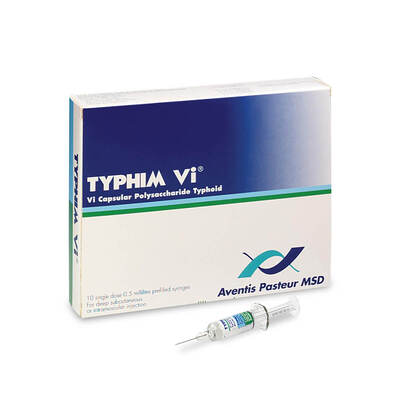
The injectable polysaccharide vaccine is a single 0.5ml dose that should be given at least two weeks before exposure and protects for three years under European guidance, as set out in the Typhim Vi summary of product characteristics.
That single dose, short lead time makes it one of the more forgiving travel vaccines for patients who plan slightly late.
Typhim Vi is the typhoid vaccine your travel clinic is likely to recognise on sight, supplied in single syringes or packs of ten.
Yellow fever
Yellow fever is a mosquito borne viral infection found in parts of Africa and South America, and proof of vaccination is a legal entry requirement for some countries.
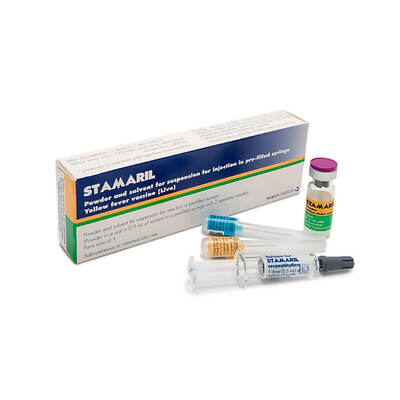
The vaccine is a single 0.5ml dose that takes ten days to provide protection and lasts at least ten years, often for life, as documented in the Stamaril summary of product characteristics.
Because it can only be administered at a registered centre, that ten day window before travel is a hard deadline patients must respect.
Stamaril is the yellow fever vaccine held by certified centres for this purpose, available to registered clinics through WMS.
Other private vaccines worth knowing
Beyond the headline three, several private vaccines come up regularly in consultations.
Hepatitis B is a three dose course for travellers at risk of blood or body fluid exposure, or on longer stays.
Rabies is a pre-exposure course of several doses for remote travel, animal contact or limited local medical access.
Japanese encephalitis suits extended rural stays in parts of Asia.
Each needs lead time, which is why identifying them early in the consultation is so important.
The common thread is that none are NHS funded, so the cost conversation should happen at the first appointment, not the last.
Essentials Travel Vaccinations
The travel vaccines your clinic depends on, ready for peak season.
Malaria: Prevention Without a Vaccine
Malaria deserves separate attention, because it breaks the pattern travellers expect.
There is no routine travel vaccine for malaria, so protection relies on antimalarial tablets combined with avoiding bites.
These tablets are not free on the NHS and require a prescription, which is one of the most common surprises patients have when planning a trip to the tropics.
As NHS Fit for Travel sets out, the right tablet depends on the destination, since resistance patterns and dosing differ by region.
Dosing schedules matter for the booking timeline.
Atovaquone with proguanil starts one to two days before travel and continues for seven days after returning.
Doxycycline starts one to two days before and continues for four weeks after.
Mefloquine starts two to three weeks before travel and continues for four weeks after, which makes it a poor fit for late bookers.
The key counselling points for patients are:
• Tablets are not a vaccine and are never 100% effective on their own
• Bite avoidance with repellent, nets and covering clothing is essential alongside them
• The full course must be finished, including the weeks after returning home
• Any fever up to a year after travel needs urgent medical attention
• The right tablet depends on destination, health and pregnancy status
Framing malaria as a tablet plus behaviour package, rather than a single jab, sets patient expectations correctly and reduces the risk of a half completed course leaving someone exposed.
Routine Vaccines and Boosters: the Overlooked Step
A travel consultation is also the moment to check that routine vaccinations are up to date, which the NHS specifically advises.
All travellers, including children, should be current with standard vaccines such as measles, mumps and rubella, since measles continues to circulate in many destinations.
The combined diphtheria, tetanus and polio booster is the same jab that delivers free NHS polio cover for travel, so it does double duty.
Adacel, Repevax and Revaxis are the booster vaccines that cover this routine ground, and they are part of the range WMS supplies to primary care, which keeps the travel and routine elements of a consultation on one order.
Folding the routine check into the travel appointment is efficient and clinically sound.
It closes immunity gaps the patient may not know they have, and it means one visit covers both travel specific and background protection.
For adults who missed childhood doses, this is often the only point at which a gap gets spotted and corrected.
Certificates and Entry Requirements
Some vaccines are a requirement for entry.
Certain countries require proof of yellow fever or polio vaccination, documented on an International Certificate of Vaccination or Prophylaxis, before a traveller can enter or sometimes leave.
Saudi Arabia requires proof of meningitis vaccination for Hajj and Umrah pilgrims.
A yellow fever certificate becomes valid ten days after vaccination, which is another reason that ten day window is a firm deadline rather than a guideline.
Even where a certificate is not legally required, advising patients to keep a personal record of their vaccinations is sound practice.
It avoids duplicate dosing on future trips and gives the next clinician a clear history to work from.
For travellers, the practical message is to treat the certificate as part of their travel documents, alongside the passport, not as an afterthought.
Children, Pregnancy and Other Considerations
Some travellers need extra care.
Pregnant and breastfeeding patients should speak to a GP before any travel vaccination, since live vaccines such as yellow fever carry specific cautions and decisions are made case by case.
People with a weakened immune system, whether from a condition such as HIV or from treatment such as chemotherapy, may be advised against certain live vaccines and should be assessed individually.
Children can receive most travel vaccines, with age appropriate preparations such as a junior hepatitis A formulation, and their routine schedule should be confirmed at the same time.
Older travellers also warrant a closer look, since the yellow fever vaccine carries a higher risk of serious adverse reactions in people aged 60 and over and should only be given where the risk of infection is real.
Flagging these groups early matters, because they often need referral or a longer planning window.
Identifying them at first contact prevents a late stage scramble when a live vaccine turns out to be unsuitable.
Frequently Asked Questions
Which travel vaccines are free on the NHS?
Four travel vaccines are free from a GP surgery: polio (as the combined diphtheria, tetanus and polio booster), typhoid, hepatitis A and cholera. They are funded because the diseases pose the greatest public health risk if brought into the UK. All other travel vaccines, including yellow fever, hepatitis B, rabies and Japanese encephalitis, are paid for privately.
How long before travel should vaccinations be arranged?
The NHS advises seeing a GP or travel clinic at least four to six weeks before travel, and ideally six to eight weeks. Some vaccines need time to build immunity, and others require several doses over weeks. Yellow fever protection, for example, takes ten days to develop after a single dose.
Are malaria tablets free on the NHS?
No. There is no routine travel vaccine for malaria, and antimalarial tablets are not funded on the NHS for travel. They require a prescription, and the right tablet depends on the destination. Tablets work alongside bite avoidance and must be taken before, during and after the trip to be effective.
How long does the typhoid vaccine last?
The injectable typhoid vaccine is a single dose that protects for three years under European guidance, after which a booster is needed for travellers who remain at risk. It should be given at least two weeks before potential exposure to allow protection to develop.
Does every GP practice offer travel vaccinations?
No. Not all GP practices provide travel vaccination services, and those that do may not stock every vaccine. Some need ordering in, and yellow fever can only be given at a registered centre. Patients should confirm what their practice offers early, or use a pharmacy or private travel clinic for vaccines the surgery does not provide.
Why does being vaccinated protect more than just the traveller?
Vaccination reduces the chance of becoming ill abroad and of bringing a disease back into the UK. This protects the wider community, including people who cannot be vaccinated themselves, which is also why the NHS funds the four vaccines that pose the greatest public health risk.
Key Takeaway
Travel vaccination comes down to three decisions: what the destination requires, what the NHS funds versus what the patient pays for, and whether there is enough time before departure. Get those right and the rest follows.
For primary care teams, peak travel season runs smoother when the vaccines are on the shelf before the rush begins, from hepatitis A and typhoid through to the routine boosters that round out a consultation.
Keeping that range stocked and ready is what turns a busy travel clinic into a confident one, and it is where a dependable supply partner pays off.
Explore out full pharmaceutical and vaccine range to prepare your practice for the season ahead.
Browse the WMS pharmaceutical rangeResources
The guidance and information in this article draws on the following sources:
• NHS - Travel vaccination advice
• NHS - Travel vaccinations overview
• TravelHealthPro (NaTHNaC) - Country information
• NICE CKS - Immunisations for travel
• NHS Fit for Travel - Malaria
• emc - Typhim Vi SmPC
• emc - Stamaril SmPC
• NaTHNaC - Yellow fever vaccination centres
Disclaimer: This article is intended for general information and for primary care reference only. It reflects available guidance on travel vaccination at the time of writing, but it does not replace clinical judgement, a formal travel risk assessment, or product specific advice based on individual circumstances. Always confirm current recommendations through TravelHealthPro and the relevant summary of product characteristics, and refer patients with complex needs, immunosuppression, pregnancy, or other risk factors for individual assessment.