


Men’s Health Assessments: Equipping Your Practice for Every Step
Published: 02 November 2026
Summary
Men's health and prostate assessment in primary care brings together three areas:
• Symptom review with examination
• PSA blood test
• Urinary assessment
Each assessment provides information to clinicians, and gives a clearer picture to make more informed decisions.
This guide covers the clinical background for each examination.
The consumables used at each stage, points around consent, sample handling and the follow-up that applies.
Prostate Health and Why Assessment Matters
Prostate concerns reach primary care in several forms, from a patient mentioning a weak stream to a request for a PSA test after a family diagnosis.
What the Prostate Does
The prostate is a small gland that sits below the bladder and surrounds the urethra. It produces the fluid that forms part of semen.
The prostate gland commonly enlarges with age.
Because it surrounds the urethra, enlargement or inflammation can change how urine flows.
Urinary symptoms can prompt many prostate assessments that need interpreting with care.
Benign Prostatic Enlargement, Prostatitis and Prostate Cancer
These three conditions account for most prostate-related concerns.
Benign prostatic enlargement is an increase in the size of the gland that is not cancer. It often causes urinary symptoms as men get older.
Prostatitis is inflammation of the prostate, which can follow an infection or develop for reasons that remain unclear.
Prostate cancer can present itself quite differently from either of these.
Urinary symptoms do not by themselves point to prostate cancer.
Recognising change and arranging assessment remain part of routine practice.
Symptoms That May Prompt Assessment
Clinicians describe these as lower urinary tract symptoms (LUTS), and the NICE guideline on LUTS in men (CG97) divides them into voiding, storage and post-micturition groups.
Common prompts include:
• Needing to pass urine more often, particularly at night
• Hesitancy, a weak stream and flow that stops and starts
• Dribbling, or a feeling that the bladder has not emptied fully
• Urgency, or difficulty postponing urination
• Pain on passing urine
• Blood in the urine or semen
• Pelvic discomfort that does not settle
• Erectile dysfunction
NICE guideline NG12 (suspected cancer) recommends considering a PSA test and a DRE in men with unexplained LUTS, erectile dysfunction or blood in the urine that can be seen.
When Prostate Cancer Has No Early Symptoms
Some men with prostate cancer have no symptoms in the early stages.
Men with no urinary symptoms may still need to discuss testing, for example because of age or family history.
Later disease can cause bone or back pain, weight loss and lethargy, which NICE lists among the features that need assessment.
Men with concerns should be encouraged to speak with a healthcare professional, who can discuss symptoms, risk factors and the investigations on offer.
Who Is at Higher Risk
Prostate cancer mainly affects men over 50, according to the NHS.
Prostate Cancer UK reports that about 1 in 8 men in the UK will be diagnosed in their lifetime, rising to about 1 in 4 for Black men.
Family history also plays a role. A man whose father or brother has had prostate cancer is about two and a half times more likely to develop it, and breast or ovarian cancer in a mother or sister can raise the risk as well.
A BRCA2 gene variant is linked with a higher risk, and a clinician may discuss it alongside family history.
Prostate Cancer UK offers an online risk checker that practices can point patients towards.
The same guidance applies to trans women and non-binary people who have a prostate.
Men's Health Digital Rectal Examination
Supporting sensitive examinations with essential clinical supplies.
-
£32.20 Save £6.44£25.76£30.91 inc VAT
-
£21.40 Save £4.28£17.12£20.54 inc VAT

What a Digital Rectal Examination (DRE) Involves
During a DRE, the clinician wears gloves, applies lubricant and gently inserts one finger into the rectum to assess the size, shape and texture of the prostate.
The patient usually lies on their left side with the knees drawn up towards the chest.
Clinicians look for changes that need further investigation, such as a nodule, a firm area or asymmetry.
NICE guideline CG97 recommends that the assessment also covers the abdomen and genitalia, with a check for a bladder that can be felt.
Informed Consent, Chaperones, Dignity and Privacy
Explain the procedure before it starts. Explain why it is being recommended and what the patient will feel.
Obtain informed consent and confirm that the patient understands they can ask to stop at any point.
The GMC guidance on intimate examinations and chaperones says patients should be offered a chaperone, and that the offer and the outcome should be recorded in the notes.
Provide a screen or curtain, let the patient undress and dress in private, and offer a sheet or blanket for cover.
For some men the DRE is a barrier to seeking assessment, so a calm explanation of what it involves and why can make a difference.
DRE Consumables
A small set of items supports each DRE:
• Examination gloves: These support hand hygiene and infection prevention for the patient and the clinician. Nitrile gloves also avoids the latex allergy risk.
• Sterile lubricating jelly: The jelly helps the examination and improves patient comfort. Individual sachets avoid the cross-contamination risk of reusing a tube.
• Couch roll: Couch roll protects the couch and is changed between patients.
• Disposable apron: An apron protects the clinician’s clothing during the examination.
• Wipes or paper towels: These let the patient clean themselves afterwards.
What a DRE Can and Cannot Tell You
A DRE is one part of an assessment.
A normal examination does not rule out prostate cancer, because the finger can reach only part of the gland.
Findings need weighing against symptoms, clinical history and any further investigations, such as a PSA result.
What is a PSA and How are Results Interpreted?
Prostate-specific antigen (PSA) is a protein made by the prostate, and its level can be measured with a blood test.
A clinician may offer a PSA test after a discussion that covers:
• Symptoms
• Age
• Risk factors
• Individual’s circumstances
A high PSA level does not mean that cancer is present. Levels can also rise with benign prostatic enlargement, inflammation and infection.
A low result does not exclude cancer either.
Results therefore need reading in context, alongside symptoms, history and examination findings.
For the age-specific thresholds that trigger referral, follow NICE guideline NG12 and the pathway your area uses.
Prostate Cancer UK explains how these differ from the thresholds used under the risk management programme.
Before the Test
Several factors can affect a PSA result, so it helps to go over them with the patient before the sample is taken.
These include:
• Ejaculation. The NHS advises avoiding ejaculation for 48 hours before the test.
• Exercise. The NHS advises avoiding vigorous exercise, including cycling, for 48 hours before the test.
• Infection. A urine infection can raise PSA, so the NHS advises waiting 4 to 6 weeks after an infection has cleared. A urine dipstick before the test can help rule out infection.
• Recent biopsy. Prostate Cancer UK advises waiting six weeks after a prostate biopsy.
• Medicines. Finasteride and dutasteride lower PSA levels, so note them when interpreting results.
Practice varies on whether blood is taken before or after a DRE.
Some laboratory manuals prefer blood first, while NHS Cornwall referral guidance says a routine DRE has little effect on PSA.
Where the guidance is unclear, taking the blood before the DRE avoids the question.
Blood Collection Tubes, Needles and Holders
The tube must match the requirements of the receiving laboratory, so check the pathology handbook for the tube type, fill volume and any timing instructions.
Safety needles and single-use holders support venepuncture and reduce the risk of needlestick injury.
The Health and Safety (Sharp Instruments in Healthcare) Regulations 2013 require employers to provide safer sharps where reasonably practicable.
Tourniquets, Gauze and Plasters
A tourniquet assists venous access and should stay on for as short a time as possible.
Gauze applies pressure after the needle is removed, and a plaster covers the site once bleeding has stopped.
Patients taking anticoagulants may need pressure applied for longer.
Check for a plaster allergy before applying one and keep a hypoallergenic alternative to hand.
Sharps Containers and Safe Disposal
Used needles go straight into a sharps container at the point of use, without resheathing.
Containers should not be filled beyond the fill line, and a temporary closure should be used when they are not in use.
HSE guidance covers sharps disposal arrangements.
Patient Identification, Specimen Labelling and Transport
Confirm identity with the patient using the identifiers your policy requires. Label the sample at the point of collection, before the patient leaves.
Check that the details on the tube match the request form.
Specimen bags and request forms keep each sample and its paperwork together in transit.
Transport and storage follow your pathology guidance, including any time limit between collection and delivery.
Where samples travel by courier or post, UN3373 packaging rules for Category B biological substances apply.
Men's Health Urinary Assessment
Essential testing supplies to help healthcare professionals assess urinary health.

Urinary Assessment and Urinalysis
The prostate surrounds the urethra, so enlargement or inflammation can change urine flow.
The symptoms listed earlier in this guide are the starting point. The assessment also covers pain on passing urine and any change in urine appearance.
A frequency volume chart kept for at least 3 days records how often and how much a patient passes, as recommended in NICE guideline CG97.
Other Causes of Urinary Symptoms
Urinary symptoms have causes beyond the prostate.
A urinary tract infection can cause frequency, urgency and pain on passing urine.
Bladder conditions such as overactive bladder can produce similar symptoms.
Some medicines also affect urinary function, including diuretics and anticholinergics. Diabetes or heart failure can add to night-time urination.
Because the causes overlap, it's important to gather a detailed history before any conclusion about a patient's prostate.
Urine Specimen Pots and Urinalysis Strips
Urine specimen pots collect samples for testing or laboratory investigation, and a midstream sample reduces contamination.
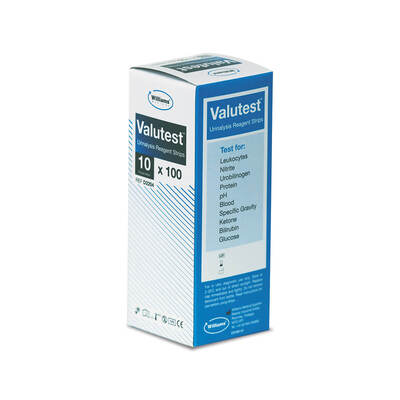
Urinalysis strips detect selected substances or abnormalities, depending on the strip used, and commonly report blood, glucose, protein, leukocytes and nitrites.
In a prostate assessment, a dipstick helps to look for blood or signs of infection, and infection can also raise PSA.
Urinalysis supports an assessment but cannot diagnose prostate disease alone. Further investigations depend on the symptoms and the findings.
Urgent Symptoms
A patient who suddenly cannot pass urine needs urgent assessment.
Blood in the urine that can be seen also warrants prompt assessment.
Retention can affect the kidneys, so consider checking renal function when it is suspected.
Follow the pathway your area uses for both scenarios.
Bringing the Men’s Health Assessment Together
Preparation, communication, infection prevention and correct specimen handling run through every stage of the assessment.
Hand Hygiene and PPE
Follow your infection prevention policy for hand hygiene and choose gloves and other protective equipment to match the task.
Clean Examination Areas
Prepare the room before the appointment, with consumables to hand, and clean equipment and surfaces according to local policy.
Change couch roll between patients and put any reusable equipment through the decontamination schedule.
Safe Sample Collection and Waste Disposal
Use the correct containers, label each sample at the point of collection and follow the laboratory’s requirements for handling and transport.
Dispose of contaminated waste and sharps in the waste streams set out in your policy.
Documentation and Follow-Up
Record the findings and the consent given and note whether a chaperone was present or the offer was declined.
Explain the next steps to the patient, including when to expect results and who will contact them.
Track results through to the patient and use the suspected cancer pathway where the NICE NG12 criteria are met.
FAQs
When should you get a prostate exam?
Men are usually assessed when symptoms prompt it. For example, needing to pass urine more often, a weak stream or blood in the urine or semen.
A GP or practice nurse can talk through the options, which may include a PSA blood test, a DRE or both.
How is the prostate exam done?
A DRE is brief. Once the procedure is explained and consent is given, the patient lies on their left side with the knees drawn up.
The clinician wears gloves, applies lubricant and gently inserts a finger into the rectum to feel the size, shape and texture of the prostate.
What age should you have a prostate exam?
There is no set age for a DRE, which is carried out when symptoms or concerns call for it.
For PSA testing, men aged 50 and over can ask for a test after a discussion of the benefits and risks.
Prostate Cancer UK advises that men at higher risk, including Black men and men with a family history, can raise it from 45.
How often should you get a prostate exam?
No fixed interval applies to every man.
How often a man is retested depends on his PSA result, age, symptoms and risk, and the clinician agrees the interval with him.
The Prostate Cancer UK consensus on PSA testing (2024) offers guidance for clinicians.
Conclusion
Each part of a men's health assessment and prostate examination contributes useful information.
A DRE describes the gland, a PSA test measures a protein the prostate produces, and urinalysis looks for signs of infection or blood.
Read together with symptoms and history, they help the clinician choose the next step for each patient.
Explain the procedure, obtain consent, maintain privacy, use the correct consumables and handle samples in line with laboratory requirements.
WMS has the essentials you need to prepare for men's health awareness month, including gloves, pharmaceuticals and PPE supplies.
Shop Men's HealthResources
• NICE guideline CG97: Lower urinary tract symptoms in men
• NICE guideline NG12: Suspected cancer: recognition and referral
• NHS: PSA testing
• GMC: Intimate examinations and chaperones
• Prostate Cancer UK: PSA blood test
• Prostate Cancer UK: PSA consensus 2024
• Prostate Cancer UK: Navigating NICE NG12 and PCRMP guidelines on PSA testing
• NHS Cornwall: Prostate cancer and elevated PSA referral criteria
• HSE: Needlestick injuries
• Causes of Prostate Cancer - NHS
• The Health and Safety Regulations 2013
• Packaging and Transport Requirements for Patient Samples: UN3373
Disclaimer: This article gives general information for healthcare professionals. It does not replace professional judgement or the pathology and referral guidance your area follows. Check current guidance before acting on it.