Leukoplast Dressings: Wipe It. Suture It. Protect It.
Published: 03 August 2026
Summary
Not every stage of wound healing carries the same risk.
The days right after closure carry the highest chance of complication.
As healing progresses, the risk profile changes, and the product should change with it. This page looks at the two decisions in this stage.
The first is the post-operative dressing choice right after closure. The second is the everyday protection applied once a wound no longer needs surgical-grade cover.
In this article we look at the patient's wound healing journey, and how different stages require different products, as well as post procedure protection.
Why the Protection Phase Carries the Most Risk
The protection phase after a wound closure determines whether a wound heals without incident or develops a preventable complication.
There are two risks to consider during this phase.
The first is infection, where contamination reaches the wound before healing has begun.
NICE guidance on surgical site infection prevention places dressing selection and wound care technique among the modifiable factors that influence infection rates in the days following closure.
The second risk that gets less attention is damage to the skin around the wound itself.
Medical adhesive related skin injury (MARSI) describes this problem as a poorly matched adhesive that strips, tears or irritates the skin around a wound with repeated changes.
It is a recognised complication in wound care literature, and it becomes more likely wherever skin is already fragile.
Neither risk is evenly spread across the healing timeline, and the first few days matter the most.
The wound cannot yet defend itself, dressing changes happen often, and a mismatched dressing can cause damage in that period.
The risk eases as healing progresses, but it never disappears.
Everyday protection still has to hold without irritating skin that has already been through a lot.
This is the case for treating the protection phase as a series of decisions rather than one continuous stage.
Post-Operative Dressing Decision
Every post-operative dressing decision comes down to a handful of questions.
• How much exudate is the wound producing?
• Will the patient shower, work with their hands or return to activity within days of closure?
• Is the surrounding skin already fragile from age or repeated handling?
Some wounds are straightforward.
Exudate stays low to moderate, and there is no water exposure to plan around.
Leukomed is built for exactly this case.
It is sterile and absorbent, with a backing permeable enough that moisture vapour can escape rather than sitting against the skin.
Since a backing that traps moisture creates the maceration risk a dressing is supposed to prevent in the first place, allowing the vapour to escape matters more than it first sounds.
Leukomed is also radiotransparent, which means it never has to come off just because imaging is needed while it is still in place.
Water exposure also changes things.
A patient who showers daily, works with their hands or simply won't stay still for a week needs a dressing built for that lifestyle.
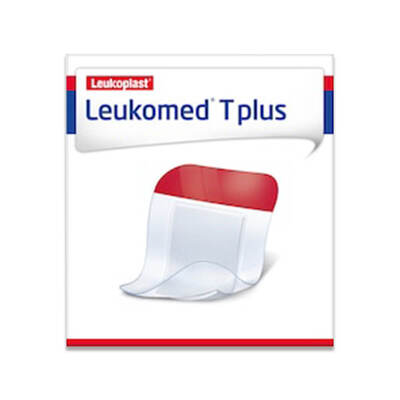
Leukomed T Plus is a transparent film dressing that can be worn for up to seven days, depending on wound condition.
Its adhesive is designed to be gentle even on sensitive skin.
The water-repellent film holds up in the shower, which is important when fewer dressing changes means fewer chances to disturb the healing tissue underneath.
When Moisture Becomes a Clinical Problem
Trapping moisture against skin that surgery has already stressed raises the same maceration risk an over-protective dressing is meant to prevent.
Then there's matching wear time to the wound.
A dressing rated for seven days is not the same as a dressing that must stay on for seven days regardless of what is happening underneath it.
Exudate levels can shift in the days after closure, and a wound producing more fluid than expected under a fully occluded film needs reassessing.
Leukomed's air permeable design suits wounds where moisture needs somewhere to go.
Leukomed T Plus suits wounds where the priority is keeping water out.
Leukoplast Wound Closure Dressings
Not every healing stage needs the same dressing. Explore the range built for each one.
When the Wound Moves Past a Surgical Dressing
A few signs tend to appear together when a wound has moved past needing surgical-grade cover.
• Exudate has dropped to a minimal or absent level.
• The wound bed shows granulation tissue forming, rather than remaining open.
• Closure has held long enough that movement or clothing no longer puts real stress on the wound.
When those signs appear, surgical-grade protection has done its job. Continuing down that route usually only adds extra cost to your practice.
The wound still needs a barrier against dirt, friction and bacteria, but it no longer needs the level of exudate management or occlusion that a surgical dressing is built to provide.
Choosing Everyday Protection
Everyday protection still comes down to the same underlying question: what does this patient do, and what does their skin need?
The wound itself is now less demanding, so the patient's activity and skin condition are the main factors in deciding which dressing type best fits their needs.
• Patients who wash normally or have skin that reacts poorly to strong adhesives need a gentler, washproof option.
• Patients doing manual work, sport or frequent hand washing need a plaster built to hold under real movement.
• Older or more fragile skin needs a product that will not strip on removal.
Leukoplast Barrier is waterproof and breathable at the same time, which sounds like a contradiction, until you discover what each property does.
The waterproof layer keeps moisture and bacteria out. The vapour permeability lets moisture from the skin escape too, instead of trapping it the way a fully sealed plaster would.
It is also latex-free, a useful benefit when latex sensitivity often goes unmentioned until it causes a problem, and low-adherent enough that removal does not disturb the new skin underneath.
Leukoplast Strong takes the opposite approach.
It uses a high-tack, rubber-based adhesive on a flexible fabric backing, built to stay in place through movement that would work a lighter plaster loose within hours.
The dressing is water repellent rather than fully waterproof, so it should be used when the priority is grip and durability rather than a complete seal against water.
Warming the dressing between the palms before application also increases adhesion, and is a simple technique worth passing on to patients whose plaster begins to lift.
Where the Wrong Everyday Plaster Slows Things Down
Everyday plasters often fail when there is a mismatch between the plaster and what the patient does on a daily basis.
A patient doing manual work who is given a light plaster will likely have it lifted, or gone all together within hours.
Fragile or aging skin under a high-tack fabric plaster risks stripping on removal, the exact adhesive injury this phase is meant to prevent.
A plaster that fails early means another dressing change and another chance to disturb the healing skin.
A plaster that is too aggressive for fragile skin can cause an injury that it was meant to prevent.
Matching the dressing to the patient, and not just the wound, is what keeps this stage of healing from creating further complications.
| Product | Best Suited For | Water Exposure | Key Property |
|---|---|---|---|
| Leukomed | Standard post-operative wounds, low to moderate exudate | Not designed for water exposure | Sterile, absorbent and air permeable. Radiotransparent for imaging |
| Leukomed T Plus | Post-operative wounds needing to shower or stay active | Water-repellent, wearable in the shower | Up to 7 days wear depending on wound condition. Skin-friendly adhesive |
| Leukoplast Barrier | Minor and healing wounds needing daily washproof cover | Waterproof and breathable | Latex-free. Low-adherent pad |
| Leukoplast Strong | Healing wounds in high-motion or manual work settings | Water-repellent, not fully waterproof | High-tack fabric adhesive. Highly absorbent pad |
Leukoplast Frequently Asked Questions
What is Leukoplast?
Leukoplast is a wound care brand covering both professional post-operative dressings and self-treatment plasters for minor wounds. The Leukomed range, including Leukomed and Leukomed T Plus, is designed for surgical and post-operative use in clinical settings. The Leukoplast Barrier and Leukoplast Strong ranges are designed for everyday use once a wound has moved past needing that level of care.
Is Leukoplast waterproof?
It depends on the product. Leukoplast Barrier is waterproof and breathable, forming a barrier against moisture while still letting the skin underneath vent. Leukoplast Strong and Leukomed T Plus are water-repellent rather than fully waterproof, built to handle splashing and short water exposure without being rated for full submersion. Leukomed itself is not designed for water exposure at all, and instead relies on absorbency and air permeability.
How do you use Leukoplast dressings?
Application varies slightly across the range, but the underlying principle stays the same. Clean and dry the wound area first, then apply the dressing so the wound pad sits centrally over the wound without touching the adhesive or pad surface with your fingers. Press firmly around the edges to secure a complete seal, particularly with film dressings like Leukomed T Plus. For adhesive plasters such as Leukoplast Strong, warming the dressing between the palms before application can improve adhesion. Always follow the specific instructions for use provided with each product.
What is the difference between Leukomed and Leukomed T Plus?
Leukomed is a standard non-woven post-operative dressing suited to wounds with low to moderate exudate, with a backing that stays permeable to moisture vapour to reduce maceration risk. Leukomed T Plus is a transparent film dressing built for the same post-operative stage but with water-repellent protection, allowing patients to shower without compromising the dressing. It can be worn for up to 7 days depending on wound condition, compared to more frequent changes typically needed with a standard dressing.
What is the difference between Leukoplast Barrier and Leukoplast Strong?
Leukoplast Barrier is a waterproof, breathable film plaster suited to everyday use and frequent washing, and it is latex-free. Leukoplast Strong is a water-repellent fabric plaster with a high-tack adhesive, built for patients doing manual work or activity that would work a lighter plaster loose. Choosing between them comes down to how much movement or moisture exposure the patient's daily routine involves, rather than the wound itself.
Key Takeaway
Wound protection is rarely one task performed the same way through the whole process. Each distinct decision is shaped by the patient in front of you.
Immediately after closure, the choice between a standard and a water-repellent dressing should follow exudate level, skin condition and how realistic it is to keep a patient out of water and away from activity.
Once a wound has moved past needing that level of cover, the choice between washproof film and secure fabric protection should follow the patient's lifestyle rather than the wound alone.
Getting either decision wrong creates the injury and contamination risk the right dressing is meant to prevent.
Protecting it properly is what turns a well-closed wound into one that heals without becoming its own complication.
Our range of Leukomed and Leukoplast dressings, including size and format options for each stage, are available in our full medical dressings range.
View Our Medical Dressings RangeResources
This article draws on the following sources and product information.
• NICE NG125: Surgical Site Infections, Prevention and Treatment
• PubMed: Medical Adhesive Related Skin Injury Research
• Leukomed Product Information
• Leukomed T Plus Product Information
• Leukoplast Barrier Product Information
• Leukoplast Strong Product Information
Disclaimer: This article is written to support product selection for wound protection and does not replace individual patient assessment, full product instructions for use or local clinical protocols. Always confirm current product specifications against manufacturer literature before use.